
Stock markets closed lower for the second straight day on Friday amid relentless foreign fund outflows and losses in blue-chip stocks Reliance Industries, ICICI Bank and State Bank of India. Benchmark BSE Sensex declined by 55.47 points or 0.07 per cent to settle at 79,486.32. During the day, it tanked 424.42 points or 0.53 per cent to 79,117.37.
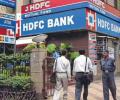
The merger of housing finance major HDFC with the country's largest private lender HDFC Bank will be effective from July 1, HDFC chairman Deepak Parekh said on Tuesday. The boards of HDFC and the private bank will meet on June 30 post to clear and approve the merger, Parekh told reporters in Mumbai. The merger of the corporation with HDFC Bank will be effective July 1, Parekh said.

The combined net profit of "early bird" companies, those that have declared their quarterly results, rose for the third consecutive quarter in July-September 2023 (Q2FY24). But the figures suggest a continued slowdown in revenue growth and stagnation in earnings over recent quarters. This slowdown is severe for companies in the manufacturing and non-financial service sectors.

Mahindra & Mahindra, Bharti Airtel, Infosys, Tata Motors, Titan, Tata Consultancy Services, Nestle and Maruti were also among the major laggards. HDFC Bank emerged as the only gainer from the pack.

Telenor Financial Services, IDFC Bank and Sun Pharma's Dilip Shanghvi have decided to withdraw their licence to set up a payments bank.

Among Sensex shares, Mahindra & Mahindra, Bharti Airtel, Bajaj Finance, Zomato, Nestle, Bajaj Finserv, Maruti and Titan were the biggest gainers. Sun Pharma, Power Grid, Tata Consultancy Services, Tech Mahindra, Asian Paints and Tata Motors were among the laggards.

The outcome of the Union Budget, quarterly earnings from corporates and global trends are the major factors to drive stock market sentiments this week, analysts said. Besides, the trading activity of foreign investors, the rupee-dollar trend and the movement of global oil benchmark Brent crude are also crucial aspects to watch out for.

Trading sentiment in the equity market will largely be driven by domestic corporate quarterly earnings, any update related to US tariffs and foreign fund movements this week, analysts said. Investors would also focus on world market trends, movement of global oil benchmark Brent crude and the rupee-dollar trend for further cues, experts noted.

The revenue growth of early birds or companies that have declared their Q4FY24 (March quarter) numbers is the highest in the last four quarters. The 178 companies (excluding their listed subsidiaries) that declared their results have reported a sales growth rate of 13.2 per cent year-on-year (Y-o-Y), taking aggregate revenue to Rs 9.1 trillion. Including other income, growth is at 16 per cent, the highest in the last four quarters.

'I disagree with much of Modi's politics, but it cannot be denied that in these years in office, he has carved more than a niche for himself in history,' points out Nilanjan Mukhopadhyay, author, Narendra Modi: The Man, The Times.

Technology is rapidly reshaping industries that have long been rooted in tradition, driving a wave of innovation that is transforming everything from finance, banking, steel to manufacturing.

Corporate earnings from blue-chips like HDFC Bank, ICICI Bank, Donald Trump's swearing-in as the US President, and trading activity of foreign investors are the key factors to drive equity markets this week, analysts said. Trump will be sworn in as the US president for a second term on Monday. This week, several key Nifty-50 companies, including BPCL, HDFC Bank, Hindustan Unilever, Dr Reddy's, UltraTech Cement, JSW Steel and ICICI Bank are scheduled to announce their financial results.

'Focus will be on smaller loan amounts to meet the needs of affordable homebuyers.'

JM Financial on Wednesday said it had a "careful and detailed review" of the Reserve Bank's order imposing restrictions on the company's financing business and asserted that there was "no material deficiencies" in its loan sanctioning process. The Reserve Bank on Tuesday imposed restrictions on JM Financial Products Ltd after it found the company indulged in various manipulations, including repeatedly helping a group of its customers to bid for various IPOs (initial public offerings) by using loaned funds. "After careful and detailed review of the order issued by the RBI on the action against JM Financial Products Ltd, we strongly believe that there have been no material deficiencies in our loan sanctioning process.

German insurance giant Allianz is planning to widen base in India with foray in banking business through its unit Dresdner Bank, besides expanding its existing non-banking financial services.

The average time lag between the date of occurrence of a fraud and its detection is 23 months; for large frauds (Rs 100 crore and above), it was 57 months.
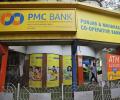
The Reserve Bank on Friday extended the regulatory restrictions on Punjab and Maharashtra Cooperative (PMC) Bank by another six months till December 2021 to enable the completion of its takeover by Centrum Financial Services. Paving the way for takeover of the crisis-ridden bank, the RBI had earlier in the month granted in-principle approval to Centrum Financial Services to set up a small finance bank (SFB). "Taking into account the time required for completion of various activities involved in the process...the validity of the ...Directive dated September 23, 2019, as modified from time to time, has been extended for a further period from July 1, 2021 to December 31, 2021, subject to review," the RBI said in a notification.

Among the Sensex firms, JSW Steel, Titan, Tata Steel, Sun Pharma, Reliance Industries, Bharti Airtel, Tata Motors and HDFC Bank were the biggest gainers. NTPC, Tech Mahindra, Maruti, State Bank of India and Larsen & Toubro were among the laggards.
From the Sensex pack, Zomato, IndusInd Bank, NTPC, Infosys, HCL Technologies, Titan, Power Grid, Hindustan Unilever, Tech Mahindra and ITC were among the gainers. On the other hand, Reliance Industries, Nestle India, Tata Motors, Adani Ports, Tata Steel, UltraTech Cement and Kotak Mahindra Bank were the laggards.

Equity benchmark indices Sensex and Nifty ended lower on Friday, dragged by auto stocks and relentless foreign fund outflows. Weak US markets and tariff threats also dented investor sentiment. The 30-share BSE benchmark Sensex dropped 424.90 points or 0.56 per cent to settle at 75,311.06.
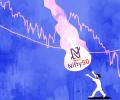
The changes will take effect on March 28, with portfolio adjustments expected before the market closes on March 27.

With new eligibility criteria for futures and options (F&O) coming into effect, Jio Financial Services and Zomato are strong contenders for inclusion in the derivatives segment, according to an analysis by Nuvama Alternative & Quantitative Research. The report suggests that these new F&O inclusions could also propel these two companies into the benchmark National Stock Exchange Nifty 50 during the March rebalancing.

Stock markets will be driven by further developments on the US-China tariff war front along with quarterly earnings announcements from IT majors Wipro and Infosys in a holiday-shortened week, analysts said. Global market trends and trading activity of foreign investors would also dictate market movement this week, experts noted.

A host of macroeconomic data announcements, the last batch of September quarter earnings, global trends, and trading activity of foreign investors will be the major driving factors for the equity market this week, according to analysts. Equity markets would remain closed on Friday for Guru Nanak Jayanti. "India is set to release CPI and IIP data on November 12, with WPI data expected on November 14.

Among the Sensex firms, Kotak Mahindra Bank, UltraTech Cement, Mahindra & Mahindra, Larsen & Toubro, ICICI Bank, IndusInd Bank, Wipro and Hindustan Unilever were the major laggards. Sun Pharma, Bajaj Finance, Bharti Airtel, Reliance Industries, Bajaj Finserv and Titan were among the winners.
The government on Friday notified the rules for insolvency and liquidation proceedings of financial service providers (FSPs). These rules, notified by the ministry of corporate affairs, will not be applicable to banks, reports Ruchika Chitravanshi.

K Krithivasan, chief executive officer (CEO) and managing director (MD) of TCS, took home a salary of Rs 25.4 crore in 2023-24 (FY24), less than chief operating officer and executive director N Ganapathy Subramaniam. Krithivasan took charge as CEO on June 1, 2023.

Errors in filing income-tax returns frequently lead to scrutiny notices, additional liabilities, or delayed refunds.

The US Fed interest rate decision, trading activity of foreign investors and quarterly earnings from corporates would largely drive the momentum in the equity market this week, analysts said. Escalating tensions between India and Pakistan over the Pahalgam terror attack will also remain on investors' radar, they added.

Hiring trends in India's white-collar job market dipped marginally by 1.4 per cent in March compared to the same month last year, driven by a decline in recruitment in the retail, oil & gas, and education sectors, a report said on Wednesday.

Concerned over household savings moving towards alternative investment avenues, RBI Governor Shaktikanta Das on Thursday asked banks to mobilise deposits through innovative products and services by leveraging their vast branch network. "Banks are taking greater recourse to short-term non-retail deposits and other instruments of liability to meet the incremental credit demand. "This, as I emphasised elsewhere, may potentially expose the banking system to structural liquidity issues," he said.

At least 13 candidates are in the race for the position of managing director and chief executive officer (MD & CEO) of Punjab National Bank (PNB), the second-largest public sector bank (PSB), according to multiple sources familiar with the matter. "Among the candidates, some are executive directors (EDs) and managing directors in major PSBs. "Financial Services Institutions Bureau (FSIB) will conduct the interviews next month," said a source.

Among the Sensex firms, Larsen & Toubro, Axis Bank, Tata Steel, Bajaj Finance, Power Grid, Asian Paints, Mahindra & Mahindra and Bajaj Finserv were the biggest gainers. State Bank of India, Hindustan Unilever, Tata Motors and Titan were the laggards.

In response to the panic triggered by Trump's trade policies, the RBI net sold approximately $43 billion in the second half of FY25 to curb volatility, as the rupee plunged to a low of 87.95 per dollar in February this year.

The UK government on Sunday announced that it will support "iconic British brand" Jaguar Land Rover (JLR) with a loan guarantee of up to 1.5 billion pounds to give certainty to the Tata Motors owned carmaker's supply chain following a devastating cyber-attack. The loan will come from a commercial bank, backed by the Department for Business and Trade's (DBT) Export Development Guarantee (EDG), provided by export credit agency UK Export Finance, to be paid back over five years.
Analysts believe that new companies getting into banking space will look at acquiring old private banks. Following this view, there has been a significant rally in banking stocks.

Bandhan Financial Services, which was given a banking licence on Wednesday, hopes to come up with a unique business model, with a mix of doorstep and retail banking.
Ask rediffGURU and PF, MF and insurance expert Purshotam Lal your mutual fund, insurance and personal finance-related questions.

Largecap companies are generally less vulnerable to economic slowdowns than their mid- and smallcap counterparts.

'A credit line on UPI is going to make banks think about credit fundamentally as they digitise the credit process entirely.'
